At a Japanese convenience store, or コンビニ (konbini), you’ve already chosen your lunch from the shelf. The cashier scans it and asks a question. Listen for three things: 袋 (fukuro), a bag; 温めます (atatamemasu), heating the food; and お箸 (ohashi), chopsticks. Each question is asking what you want done with the items in front of you.
If you recognize the offer and want it, はい、お願いします — Hai, onegaishimasu — “Yes, please” works. If you decline, name the item: 袋はいりません — Fukuro wa irimasen — “I don’t need a bag.” You can answer in a short sentence even when the cashier uses a longer one.
Catch the keyword before the polite ending
Imagine a boxed lunch and a bottle of tea on the counter. The following questions and answers are original teaching examples. A real cashier may use different wording, gesture toward an item, or not ask a particular question at all.
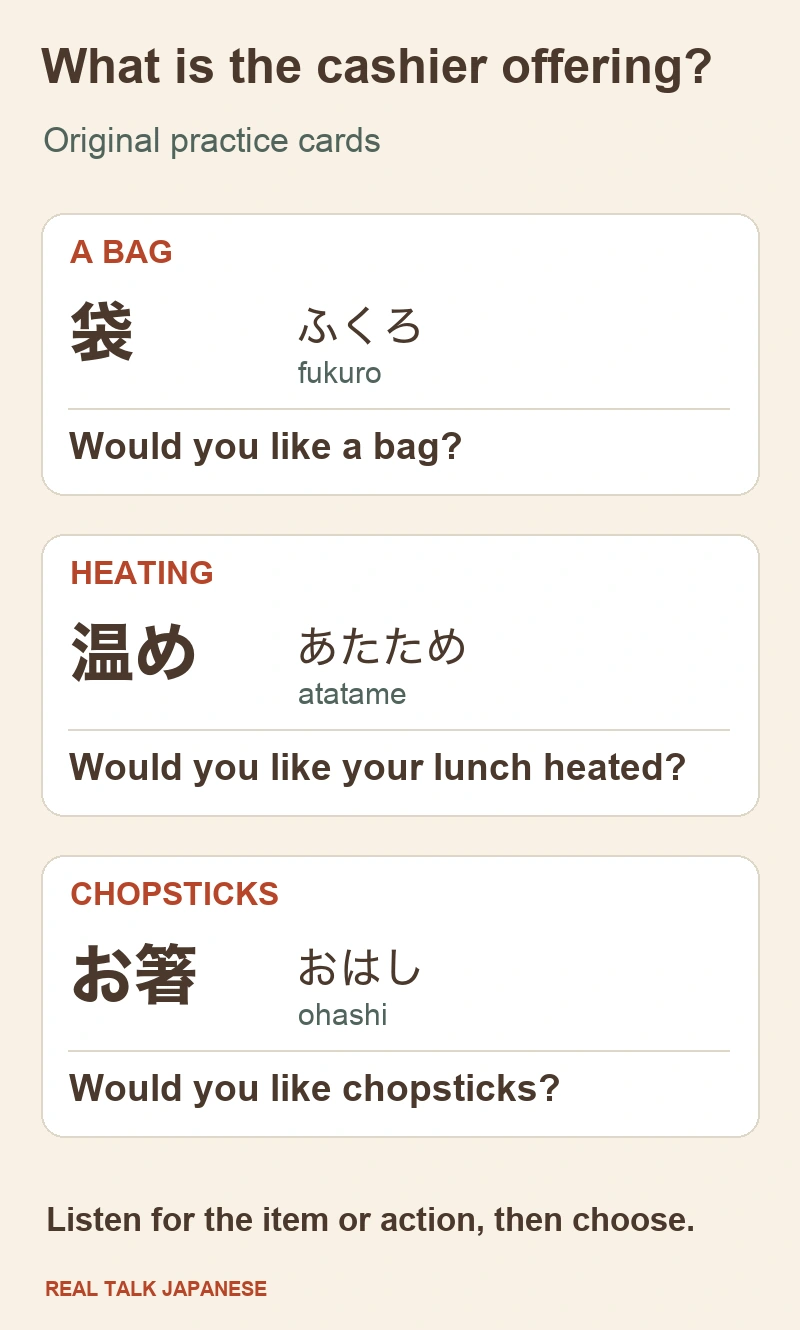
Bag: 袋(ふくろ)— fukuro
袋はご利用ですか。
ふくろはごりようですか。
Fukuro wa goriyō desu ka?
“Would you like a bag?”
If yes: 袋を一枚お願いします。— ふくろをいちまいおねがいします。— Fukuro o ichimai onegaishimasu. — “One bag, please.”
If no: 袋はいりません。— ふくろはいりません。— Fukuro wa irimasen. — “I don’t need a bag.”
Already carrying a reusable tote? The second answer is enough. If you do need a bag, asking for one doesn’t mean it will be free; check the store’s information if you need the price.
Heating: 温める(あたためる)— atatameru
お弁当は温めますか。
おべんとうはあたためますか。
Obentō wa atatamemasu ka?
“Would you like your boxed lunch heated?”
If yes: はい、お願いします。— はい、おねがいします。— Hai, onegaishimasu. — “Yes, please.”
If no: そのままでお願いします。— そのままでおねがいします。— Sono mama de onegaishimasu. — “As it is, please.”
Listen to the action: the cashier is offering to heat the lunch, not asking whether it is already warm. If you’ll eat it later at home, sono mama de means “leave the lunch unheated” in reply to this question. It says nothing about whether you need a bag or chopsticks. Follow the store’s setup if heating is self-service. Don’t assume the offer applies to every product you bought.
Chopsticks: お箸(おはし)— ohashi
お箸はお付けしますか。
おはしはおつけしますか。
Ohashi wa otsuke shimasu ka?
“Would you like chopsticks with that?”
If yes: 一膳お願いします。— いちぜんおねがいします。— Ichizen onegaishimasu. — “One pair, please.”
If no: お箸はいりません。— おはしはいりません。— Ohashi wa irimasen. — “I don’t need chopsticks.”
In this exchange, ichizen means one pair, so there’s no need to ask for two just because chopsticks come as two sticks. The Japan Foundation’s Irodori Starter contents, Lesson 16 identifies answering checkout questions about bags and chopsticks as a practical listening skill.
When the question changes, name the item
A cashier holding a bag and one pointing at a points-card sign may both finish with a polite question. Your answer depends on what they asked.
Points card: ポイントカードはお持ちですか。— ポイントカードはおもちですか。— Pointo kādo wa omochi desu ka? — “Do you have a points card?” If you don’t have one, 持っていません(もっていません)— Motte imasen means “I don’t have one.” This is not a question about how you’d like to pay.
Receipt: To ask for a receipt yourself, say レシートをお願いします(レシートをおねがいします)— Reshīto o onegaishimasu. You may receive one without having to ask.
Payment: If asked how you’d like to pay, 現金で(げんきんで)— genkin de means “in cash,” while カードで — kādo de means “by card.” Check the accepted options and follow any instructions on the terminal. Knowing the word kādo does not mean every card is accepted.
Two customers, the same basket
Both customers buy the same lunch and tea. Customer A brought a tote and plans to eat the lunch soon, but has no utensils. Customer B wants a store bag, is taking the food home to eat later, and has chopsticks there. The difference is what each person wants, not a new set of rules for the two baskets.
Original practice dialogue: Mochi is Customer A; Shiba-sensei plays the cashier.

袋はご利用ですか。 — ふくろはごりようですか。 — Fukuro wa goriyō desu ka? — “Would you like a bag?”

袋はいりません。 — ふくろはいりません。 — Fukuro wa irimasen. — “I don’t need a bag.”
お弁当は温めますか。 — おべんとうはあたためますか。 — Obentō wa atatamemasu ka? — “Would you like the lunch heated?”
はい、お願いします。 — はい、おねがいします。 — Hai, onegaishimasu. — “Yes, please.”
If asked about chopsticks, Mochi can add ichizen onegaishimasu, “One pair, please.”
Now switch roles. Shiba-sensei is Customer B, and Mochi is the cashier.
お弁当は温めますか。 — おべんとうはあたためますか。 — Obentō wa atatamemasu ka? — “Would you like the lunch heated?”
そのままでお願いします。 — そのままでおねがいします。 — Sono mama de onegaishimasu. — “As it is, please.”
お箸はお付けしますか。 — おはしはおつけしますか。 — Ohashi wa otsuke shimasu ka? — “Would you like chopsticks?”
お箸はいりません。袋を一枚お願いします。 — おはしはいりません。ふくろをいちまいおねがいします。 — Ohashi wa irimasen. Fukuro o ichimai onegaishimasu. — “No chopsticks, thank you. One bag, please.”
Notice the last answer: you can decline one thing and request another. Naming both items makes that much clearer than a single yes or no.
If you missed what the cashier said
If you caught only one word, check it: 袋ですか(ふくろですか)— Fukuro desu ka? — “A bag?” Once you confirm what the question is about, give the reply you want. If you didn’t catch any of it, try もう一度お願いします(もういちどおねがいします)— Mō ichido onegaishimasu — “Could you say that again, please?” To ask for a slower repeat, add 少しゆっくりお願いします(すこしゆっくりおねがいします)— Sukoshi yukkuri onegaishimasu.
Can you just say 大丈夫です (daijōbu desu)? It can mean “I’m fine without it” in context, but it can also sound like acceptance or reassurance. If the person hesitates, name the thing you want or don’t want. The daijōbu meaning guide compares those uses.
Do you repeat いらっしゃいませ (irasshaimase)? That’s the staff’s welcome, not a question about your purchases. You don’t have to say it back. Save your bag or heating reply until you know which item is being discussed. If you’re ordering from a menu rather than paying for things you’ve picked up, try how to order food in Japanese.
Try a checkout listening round
Choose your own preferences for the imaginary lunch and tea. Cover the English labels on the diagram. If you hear ohashi, give your chopsticks answer; if you hear atatamemasu, answer about heating. Now switch just one preference and try again. The cashier’s question can stay exactly the same.
For free listening practice, use the Japan Foundation’s Irodori Starter Lesson 16 audio with the Starter materials. If you already plan to study with a teacher, the Japanese tutor guide can help you choose a session to practice hearing an unexpected question and answering in your own words.