Yamete Meaning: What やめて Really Means (Anime vs Real Life)
Yamete means “stop it,” but memes have warped it. A native explains yamete, yamero, and yamete kudasai — and how the word works in real life.
 Rei
Rei
Yamete means “stop it,” but memes have warped it. A native explains yamete, yamero, and yamete kudasai — and how the word works in real life.
Sumimasen or gomennasai? A native Japanese speaker explains the real difference — why sumimasen also means thank you, and which apology fits each moment.

Baka means “idiot” — but it can be an insult, a joke, or almost a love word. A native explains baka vs aho, the Tokyo–Osaka divide, and anime vs real life.

Japanese borrowed “chill” and changed it. A native explains what チル really means, how it differs from English chill — and the other chiru, 散る.

Keigo isn’t one polite form — it’s three systems. A native explains teineigo, sonkeigo and kenjougo, and why even Japanese adults get keigo wrong.
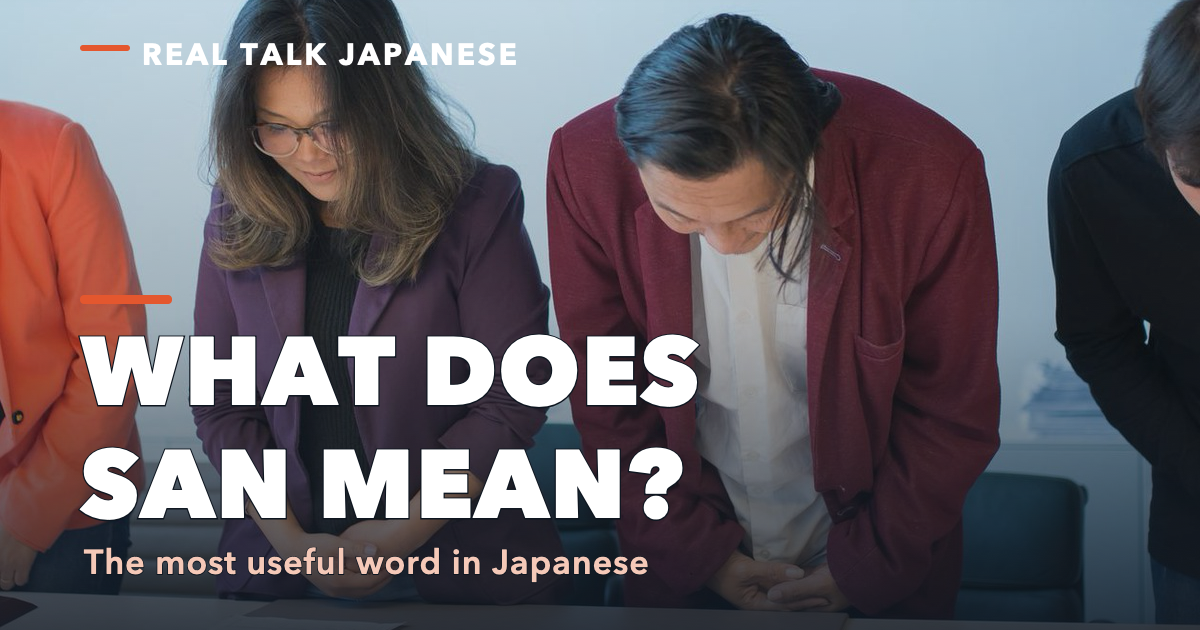
What does san mean in Japanese? Learn how to use this honorific with names, how it differs from kun and chan, and the common mistakes to avoid.

Sensei means more than teacher. Learn who gets called sensei in Japan, how to use the title with or without a name, and when it can sound sarcastic.

“Oshi” isn’t just “favorite.” A native Japanese speaker explains what 推し really means, how oshikatsu works, the Oshi no Ko connection, and how to use it right.

Japanese sentence endings decoded by a native: よ, ね, じゃん, っけ, and かな. Learn what these particles really do and how to sound natural, not textbook.
Moshi moshi isn’t “hello.” A native speaker explains what it literally means, why it’s phone-only, the fox legend behind it, and what to say at work instead.