Japanese Shrine Etiquette: How to Visit and Pray
Follow a first visit from the torii to the prayer hall. Learn the usual bow-and-clap sequence, when local rules differ, and what to ask in Japanese.
Follow a first visit from the torii to the prayer hall. Learn the usual bow-and-clap sequence, when local rules differ, and what to ask in Japanese.
Learn when tadaima means “I’m home” and when it means “right now.” Practice the reply okaeri, the going-out pair, and a short homecoming exchange.
A first-timer’s guide to goshuin etiquette: books, separate sheets, what to ask in Japanese, and how to check each shrine or temple’s current rules.

Learn what omikuji means, how to read common fortune labels, and whether to keep or tie your slip, with useful Japanese phrases and local exceptions.
Order food in Japanese with a simple item-and-quantity pattern. Practice common staff questions, takeout choices, and polite ways to ask again.
Learn the basic onsen routine, where to keep your towel and phone, and which rules to check first. Includes Japanese phrases for your first visit.
Learn what omiyage means, how it overlaps with temiyage, and what to say when giving a souvenir gift. Includes simple Japanese examples and a gift checklist.
Nee-san means older sister. Learn how onee-san, onee-chan, and ane differ, avoid the nii-san mix-up, and choose the right word in three everyday conversations.
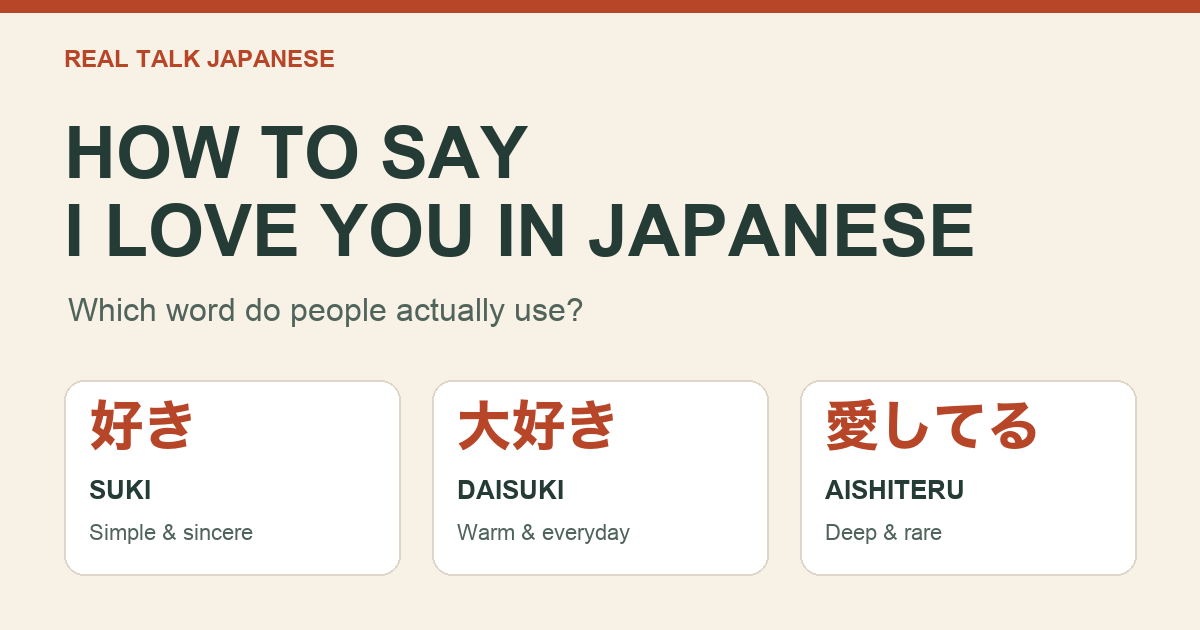
How to say I love you in Japanese: suki, daisuki, and aishiteru compared, plus how to say I love you too and what tsuki ga kirei desu ne really means.
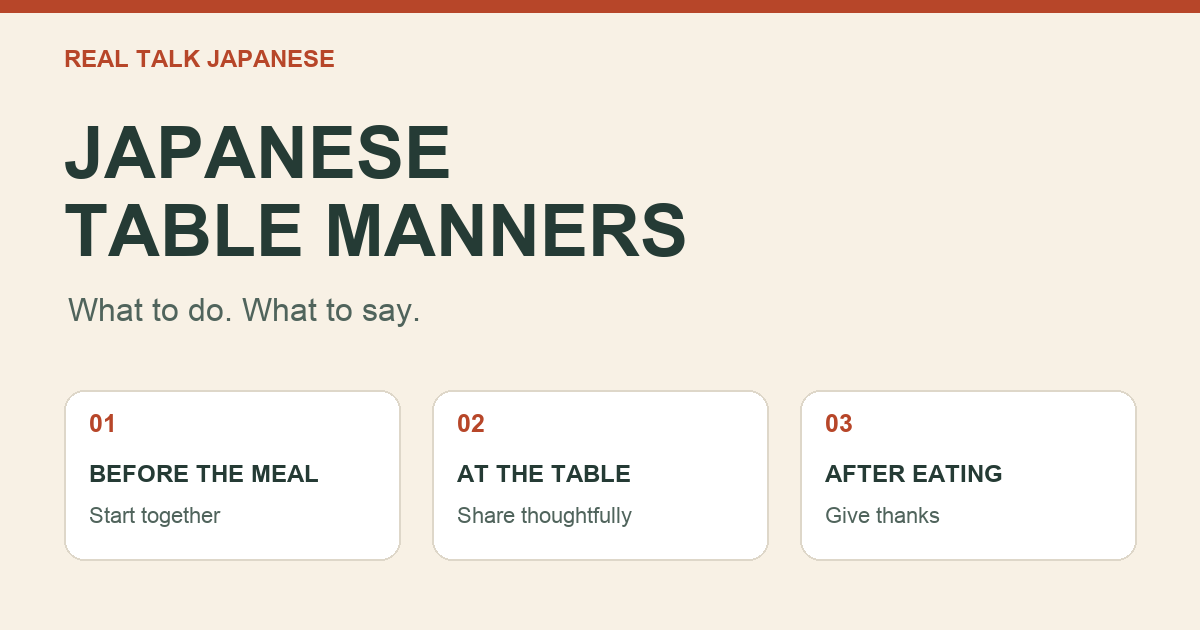
Learn Japanese table manners with useful phrases for shared dishes, chopsticks, starting a meal, and paying. Practical etiquette without rigid stereotypes.